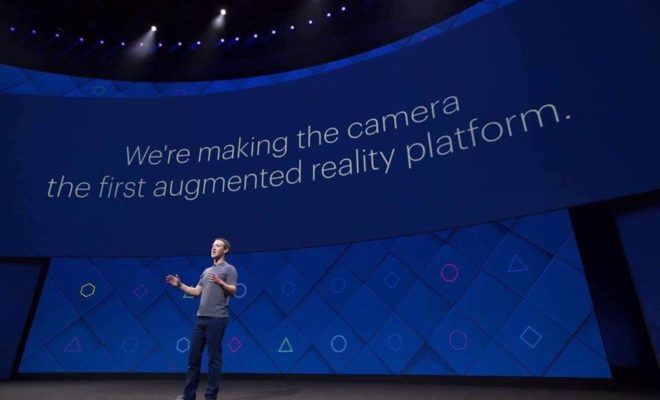
“Augmented reality” is the new catchphrase in the world of computerized visuals, and Facebook’s Mark Zuckerberg is leading the charge toward this form of technology. During this year’s F8 conference, the Facebook CEO spoke to the incorporation of this new technology (a process of overlaying digital imagery onto the real world, similar to the use of camera filters), together with virtual reality, artificial intelligence, and universal/global internet connectivity into feasible components of Facebook’s 10-year master plan.
Lifestyle
Facebook on Cusp of Ushering in New Age of Computing Using ‘Augmented Reality’
By |

Photo: Facebook/Clever Panda Marketing
The plan, which was first revealed in 2016, outlines the augmented reality component as the lion’s share of the process, which is being accelerated and released through Facebook’s Camera Effects platform. And while appearing innocent enough, the move strikes a chord with Apple and Google developers in that Facebook is, in effect, putting itself in their direct line of competition by creating a means through which tools and apps won’t need to rely on traditional smartphone interfaces.

Photo: Facebook/Wordperfect Ltd
In a demo on its version of augmented reality, Zuckerberg showed a pair of non-obtrusive, standard-style glasses through which the wearer could have a virtual “screen” in their living room, which would be larger than the latest big screen TV. In advance of his keynote address at the F8, he explained to USA Today, “We don’t need a physical TV. We can buy a $1 app ‘TV’ and put it on the wall and watch it. It’s actually pretty amazing when you think about how much of the physical stuff we have doesn’t need to be physical.” Applying that same philosophy to other technology, Facebook is looking at augmented reality for smartphones, tablets, smartwatches, fitness trackers, and on down the list of products that require actual screens to work. As an example, Zuckerberg highlighted a street art installation which, prior to waving the Facebook camera app over it, was simply a blank wall. The possibilities for application are staggering, really. And from its headquarters in California to its data centers in Texas, Oregon, North Carolina and around the world, Facebook is nicely positioned to more than compete.

Photo: Facebook/VishvaTimes.com
One stumbling block to the forward thinking that this generates, is the fact that at present, a large share of the international economy hinges on the production of the very hardware that augmented reality would make obsolete – a point acknowledged by Zuckerberg in his F8 presentation. In the interim, the company’s play for augmented reality will continue to look a lot more like it’s at loggerheads with moguls such as Snapchat, which wouldn’t be the wrong perception. In efforts to maintain the continuity of users turning to its platform, advances such as this will be required. Looking longer term, however, this is ultimately the ushering in of a brand-new age of computing – one in which companies such as Microsoft, Google, and Apple will need to bring their “A” game if they intend to keep their proverbial piece of the pie.
Source: