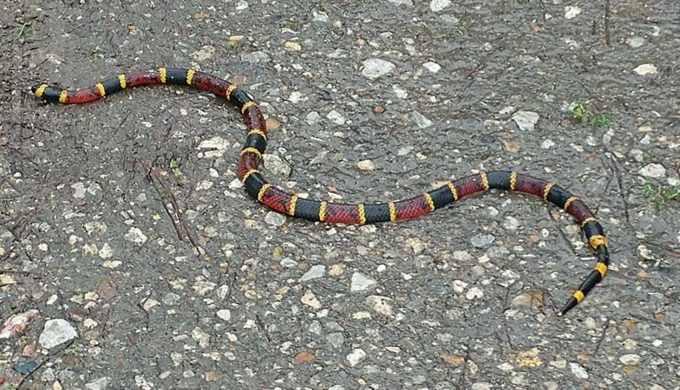
If you are bitten by a coral snake seek immediate help. The greatest danger is in the fact that symptoms may not present themselves for up to 1 or 2 days, and by then much damage is done to your body. The neurotoxic effects are dramatic, which means your nervous system is involved.
Dr. William J. Meggs of East Carolina University wrote on (Micrurus fulvius):
Eastern coral snakes are found from Texas tthe effectiveness of tourniquets and elastic bandages used with splints in treating bites from theo southern North Carolina and as far north as Arkansas.
“The project worked out great because the issue is how do you treat snake bites in the field. People have debated whether or not to use a tourniquet,” Meggs said. “The Australians recommend wrapping the limb with the bite in an Ace bandage and putting on a splint. The venom travels up the lymphatic system, but the Ace bandage is enough to slow down or stop the flow without compromising blood flow.”
This article is worth reading.
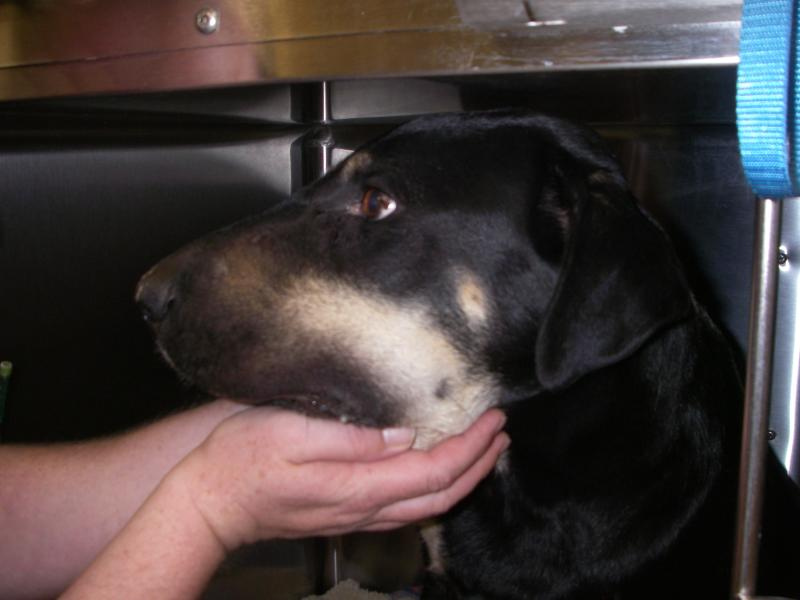
If your dog is bitten and you cannot get them into a vet, give them a 50 mg dose of Benadryl to start. Do get them to the vet as soon as possible.
If your horse is bitten, get them to the vet as quickly as possible because swelling in or on the head can be quite dangerous. Take your trailer to the horse if you can. Do not force them to walk any more than they have to, just as with a human. If you cannot get to the vet, and your horse loses the ability to breathe due to swelling, know in advance how to insert short pieces of water hose into their nostrils for easier breathing. Ask your vet to show you how.
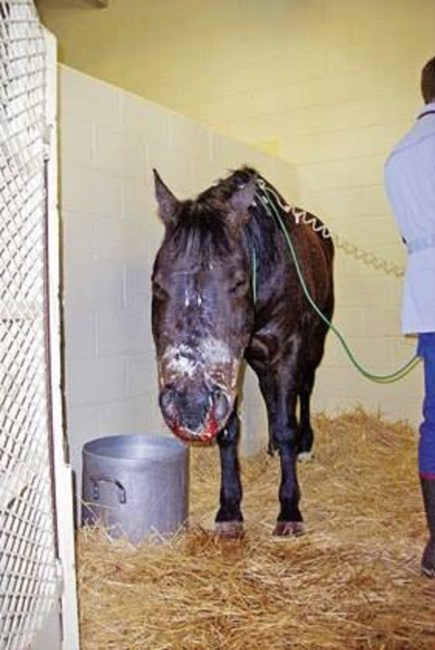
Facebook/Triple R Horse Rescue
So you survive! Once you are discharged from the hospital, stay super vigilant. Watch for unusual bleeding from your gums or easy bruising, rashes, swollen lymph nodes and very painful joints. These could all be caused by an allergic reaction to the anti-venom.
There is nothing good to say about snakebites. Take time to inform even the youngest member of your family on lifesaving techniques. Make sure they know how to use the phone and learn how to enjoy each day with sharper eyesight.