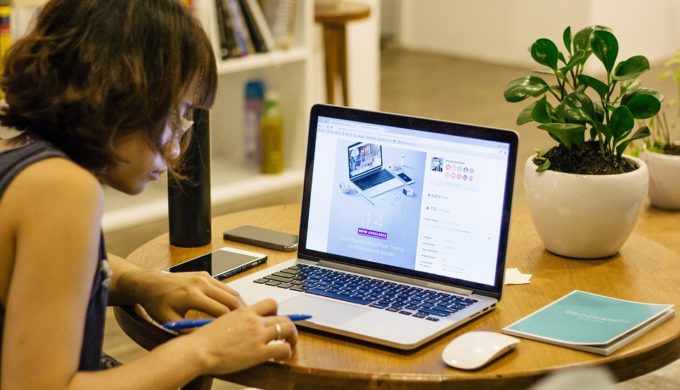
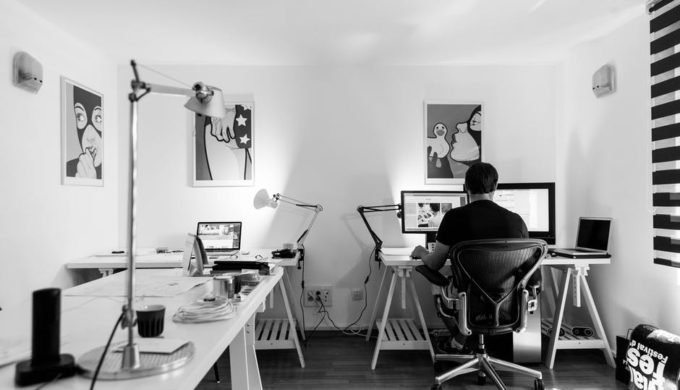
With companies more readily making the offer to work from home, businesses such as Buffer are recognizing that working remotely is a benefit to embrace as opposed to a hurdle to have to accommodate. Formerly having a brick and mortar office, the company closed its San Francisco facility in 2015, making it one of an increasing number relying exclusively on remote employees.
In an interview with CBC News, Hailley Griffis, Buffer’s public relations coordinator, said from her location in Tilsonburg, ON, Canada (where she works when she goes to see her grandfather), “I think it increases happiness on our team because you get to be around your family and be in an environment you choose…The flexibility is incredible for the ability to travel.” Born in Ottawa, ON, Griffis worked for Buffer in their San Francisco location until she made the arrangement to work remotely, allowing her to be with her family in Canada much more frequently. One of many taking advantage of virtual workplaces in the growing number of companies offering their employees greater workplace environment choice as well as time frames. She meets with Buffer’s marketing team face-to-face, twice yearly, and goes to the company’s annual retreat, which takes place in a different city around the world each time. But aside from that, she works from her Toronto apartment, online, communicating with co-workers via video conferencing and online messaging.
Photo: Pixabay
Working remotely is not for everyone and not for every company. It can often be socially isolating if the workers don’t make the additional effort towards communicating with co-workers. And, there’s no proverbial water cooler to mix and mingle around. Although closing the brick and mortar office was a money-saver for Buffer (at a total of $7,000 per month, according to their website,) they needed to effectively coordinate tech support for their 73 employees that work in varying time zones throughout the globe. They also maintained a legal address in America, where they photograph their physical mail to be forwarded to their HR department in digital format, in order to mitigate any issues.
Photo: Pexels
Becoming even more popular in the U.S. over the last two decades, in a survey reported on by the NY Times, 43 percent of working Americans identified having worked remotely for a portion of 2016, representing a four percent increase from 2012. According to Sandy Staples, a Queens University business professor: “Our technology is enabling this more and more. As the middle structures of a lot of companies thin out, it becomes more common to reach employees in different locations.” Similarly, employees have more flexibility in accepting or declining jobs through remote work opportunities. In a report they gleaned from this as well as other workplace topics, Gallup noted they’ve consistently “..found that flexible scheduling and work-from-home opportunities play a major role in an employee’s decision to take or leave a job,” adding, “Employees are pushing companies to break down the long-established structures and policies that traditionally have influenced their workdays.”
Photo: Pexels
For the meantime, although entirely virtual enterprises appear to be uncommon, they are growing increasingly behind the scenes. Entire job search websites now exist to solely post remote work opportunities. Flexjobs, one such site, releases its annual list of companies which are “mostly or completely virtual,” identifying 125 of these businesses worldwide in 2016, a dramatic increase from the 26 which were listed in 2014. A study from the University of Texas, however, has identified some drawbacks to what appears to be a win-win situation for both a company and an employee. Citing that telecommuting tends to blur the boundaries between home and work, as well as increase work-related hours, UT said the attractive option has its pitfalls. Authors of the study concluded that remote work hadn’t yet permeated society and has yet to have some bugs worked out before it becomes the norm that some are predicting it will be in a modern American workforce.